Know what's
actually left.
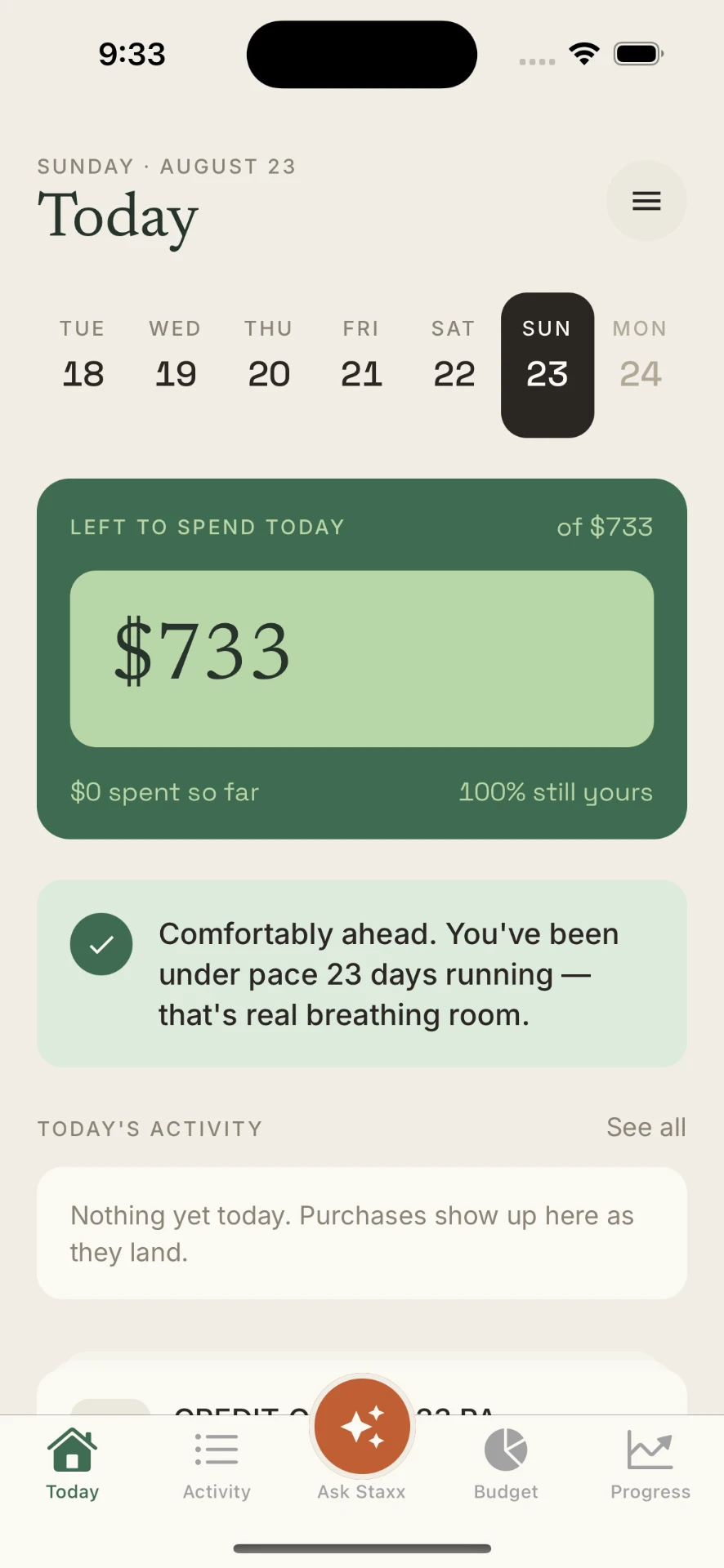
Staxx accounts for what you've spent, what's still due, and what you're saving for — then shows you what's safe to spend.
Staxx is coming to iPhone.
The problem
Most budgeting apps tell you where your money went.
Staxx tells you what's still yours to spend.
The number
One figure,
four inputs.
Staxx starts with what came in this month, subtracts what has already left, holds back what is committed, and shows the remainder. It recalculates every time a transaction lands.
September 1 – September 30
- Income this month
- $4,820
- Spent so far
- $1,640
- Bills reserved
- $950
- Goals reserved
- $500
= Safe to spend
$1,730
Goals are the fourth term. Money you set aside is gone from this number before you see it, which is the point.
How it works
Three things happen,
then it runs itself.
01
Connect your accounts
Link checking and credit through Plaid once. Transactions arrive on their own, already categorized. There is nothing to import and nothing to type.
02
Tell Staxx what's committed
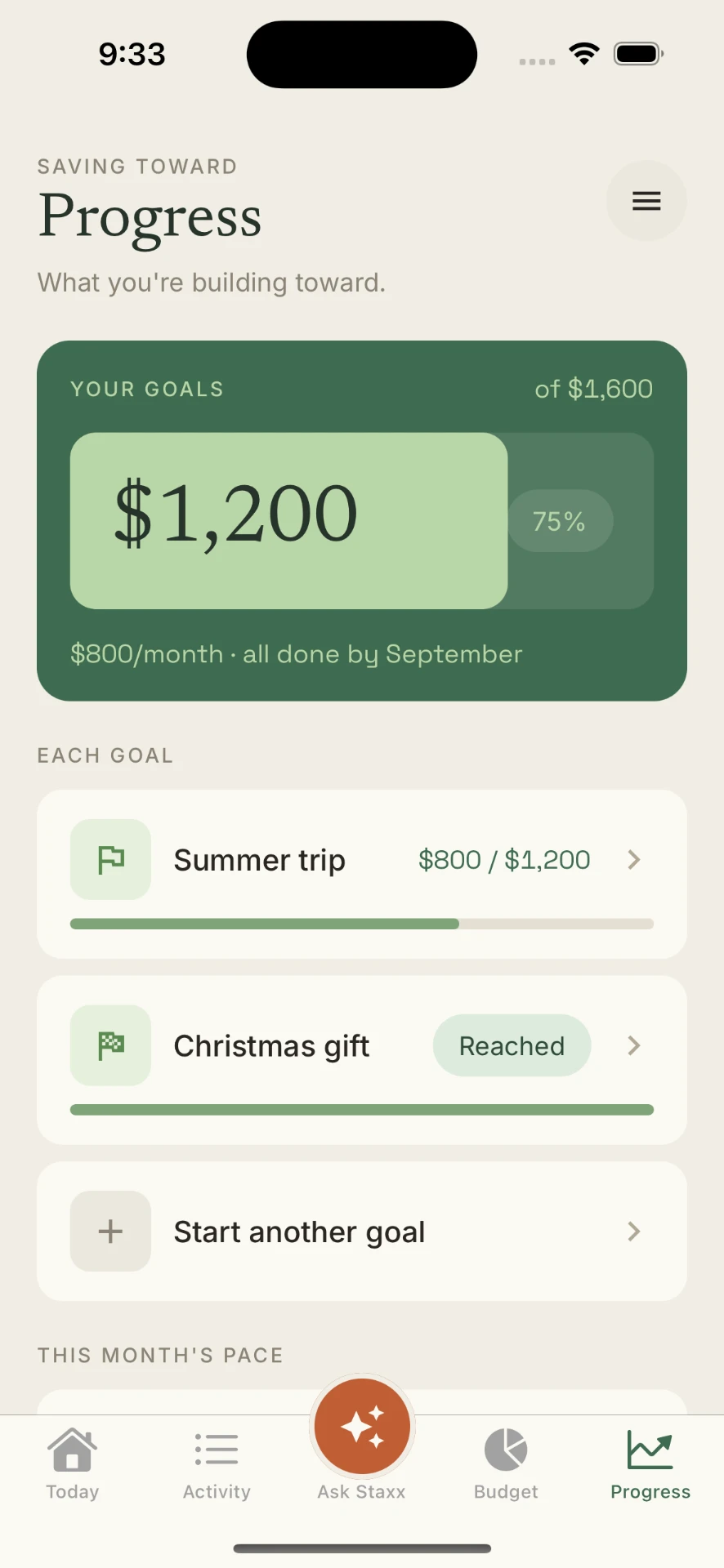
Rent, insurance, the car payment, the trip you're saving for. Bills and goals get reserved before anything else, so committed money never shows up as spendable.
03
See one number that updates itself
A coffee posts, a bill clears, a paycheck lands — the figure moves. You open the app, read one line, and close it.
What makes Staxx different
No manual entry, ever.
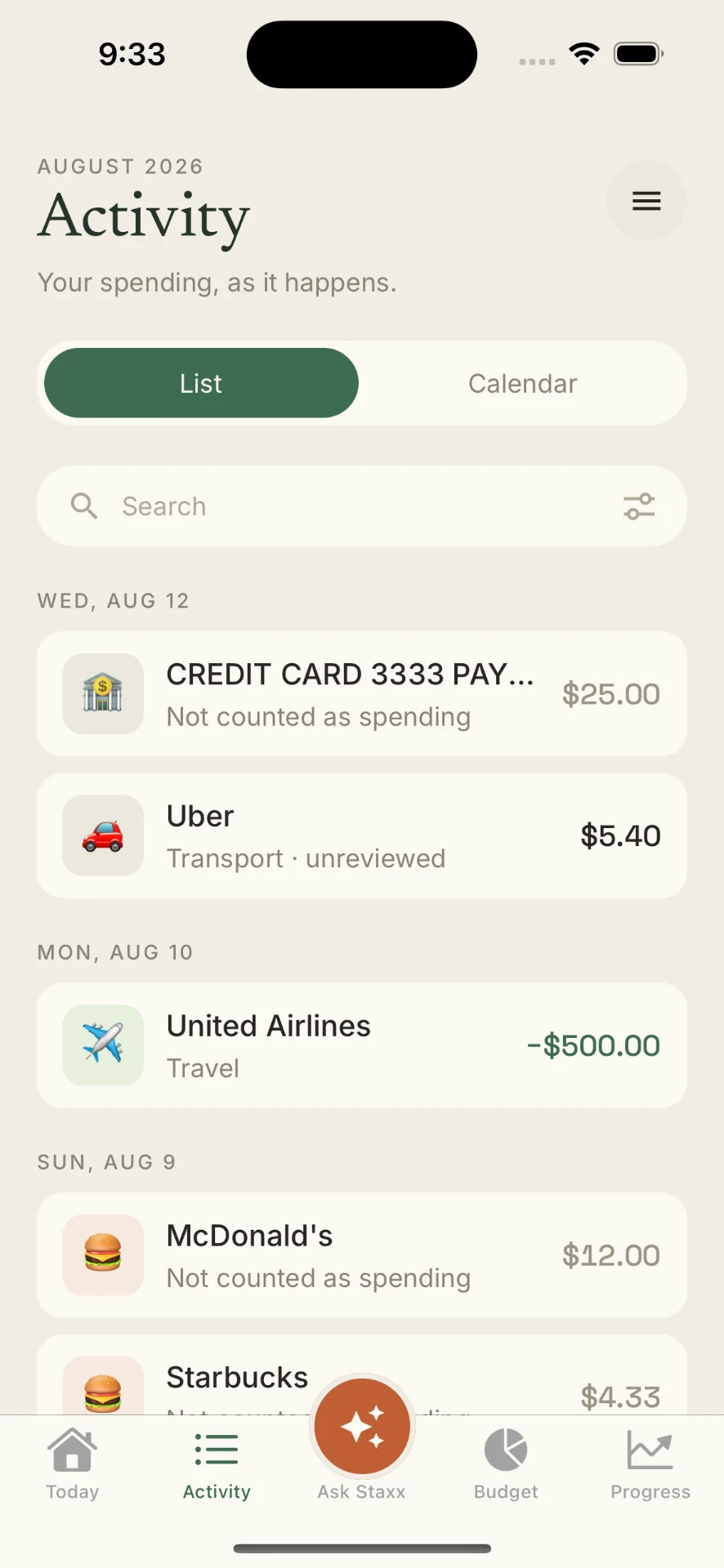
No expense logging — not once. Transactions arrive from your bank already categorized. You confirm or correct; you never log a coffee. Activity is a review queue, not a ledger.
The math errs conservative on purpose.
If a bill hasn't matched a transaction yet, Staxx keeps it reserved. It would rather understate what's safe than hand you money you might not have.
No engagement mechanics.
No streaks. No notifications designed to pull you back in. No shaming.
Your data isn't the product.
Staxx doesn't sell financial data.
Ask Staxx
Test a purchase before you make it.
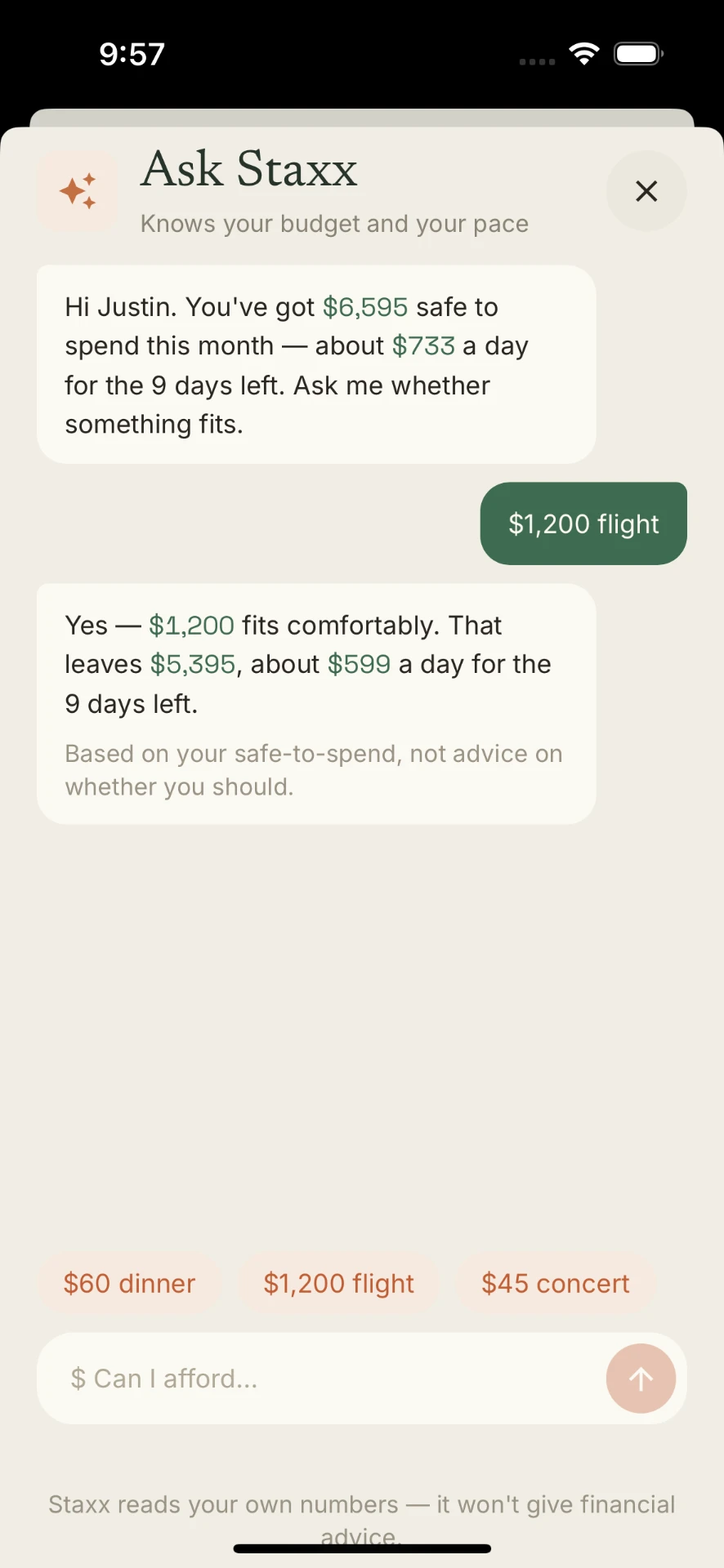
Type "Can I afford a $60 dinner?" and Staxx answers whether it fits, what's left afterward, and what that leaves you per day. It's arithmetic against your own figures, computed on your device. It isn't a general financial chatbot and doesn't pretend to be.
Knows your budget and your pace
Based on your safe-to-spend, not advice on whether you should.
Security
Staxx never sees your banking credentials.
Staxx connects to your accounts through Plaid. Your bank credentials are entered directly into Plaid and never pass through Staxx.
Access to your data is restricted at the database level — your account can only ever read its own records. Communication with our servers is encrypted in transit, and stored data is encrypted at rest by our infrastructure provider.
You can disconnect any bank, or delete your account and all its data, from inside the app.
- Read-only access. Staxx cannot move money.
- Ask Staxx runs on your own numbers.
Know what's actually left.